2016年4月2日土曜日

28th Mar.2016 友達を誘い出そう!の復習
初めは共通な興味を探すところから。
Do you like ~ing ? What do you like ?

28 March 2016
Teacher : Arron Burrow
Participants: Sam, Hiro, Yuki, Namiki, Nobu chan, Mocchan

Todays session : review - Invitations Friends Out
今日の授業は 「 友達を誘い出そう」の復習です。
今週はマチ先生が不在で、アーロン先生が特別講師で来てくれました。
前回のアーロン先生のレッスン(22nd Feb 16)のおさらいです。


1st step : Found out each other’s interests.
まず、お互いに興味がある事を探しだしましょう。下記のような文章で始めてみましょう。
Do you like ~ ?  Are you interested in ~ ?
~するのは好きですか?  ~に興味はありますか?
What do you like ~ ?  
何をするのが好きですか?

What do you like ? 何に興味があるのか、まずみんなに聞いてみましょう
 
Sam likes skiing. サムはスキーが好きです
話を膨らます会話として、例えばこんなふうに続けてみてはいかがでしょう?
Oh, I like ski too, do you ski often? how many times a week, ?...
へー、僕もスキー好きですよ、しょっちゅうやるの、一週間にどれくらい?

What do you like to do Hiro ?
Hiro likes taking pictures. And Hiro, Yuki, Aaron likes traveling (to Urabandai. )
ヒロは写真を撮ったり、旅行に行くのが好きです。

Yuki likes Onsens in Yamagata. ゆきは山形の温泉が好きです。
Yuki, Aaron and Namiki likes red wine. ゆき、アーロン、なみきは赤ワインがすき。

Nobu likes oversea traveling, especially Spain and Las Vegas. 
ノブちゃんは海外旅行が好きです、特にスペインとラスベガス。
I’m so jealous! アーロンはうらやましい~といってます。

Namiki likes cooking because she loves eating.
なみきは食べるのが大好きなのでお料理が好きです。

Mocchan likes communication and cats and driving.
もっちゃんはいろんな人と話をすることと猫とドライブがすきです。

みんな色々ですが、こうやって会話の中からお互いの興味のあることを探していきましょう

2nd step: Ask then out. 一緒に出かけましょう
I was thinking about +  ~ . (drinking wine / skiing/traveling ect)
私は~について思っている。
Would you like to go? 行ってみたいですか?
Hi Nobu, What do you like about Las Vegas? ラスベガスの何処が好きですか?
Because Nobu likes shopping at outlet and she likes to play casino.
ノブちゃんは、ラスベガスのアウトレットでのお買い物と1円から遊べるカジノが楽しみだそうです。
*なんと、のぶちゃんビギナーズラックで1円が1万円くらいになった経験があるのだとか。そして、
アーロンは子供の頃、そんなラスベガスに住んでたらしいです。So cool!

Hi Yuki, What do you like to go to Yamagata.
I would like to recommend Ginzan Onsen north of Yamagata.
I like the atmospheres and old style wooden building.

ゆきさん、山形でどこに行くのが好きですか?
私は山形北部にある銀山温泉がお勧めです。雰囲気と昔ながらの木の建物がステキなのです。

うらやましがるアーロンですが、ゆきさんは・・・・
I have planning to go to there this weekend, would you like to go together?
Arron : I love to go to hot spring. I`m looking forward to see it. Finally I got an invitation!!

週末そこ(銀山温泉)に行くことにしてるの、もし良かったら一緒にいきませんか?
とお誘いしました。
アーロンは「温泉大好きです。(素敵な場所を)見るのを楽しみにしてます。」
ついに誘ってもらえた~と喜んでいました。


アーロンとヒロで、会話レッスン
Hiro, Where is your favored place to travel?  ひろさん、どこがお気に入りの旅行先ですか
Hiro: I like Urabandai, or Bijin Bayashi in Niigata - beautiful beech`s primeval forest.
裏磐梯や、新潟の通称「美人林」(ぶなの原生林で有名)です
Arron: I love traveling too, I like Tsugawa(津川) which is famous of Kitsune-no-Yomeiri(狐の嫁入り). its beautiful area.We are interested in same things.
僕も旅行が好きです。僕は狐の嫁入りで有名な津川が好きです。とても綺麗なエリアです。僕たち
は趣味が似てますね。
Arron: Where do you like to taking cherry blossom pictures in Urabandai?
 裏磐梯で桜の写真を撮るのはどこがよいですか?
Hiro: I’m recommend at Magarisawa area. 曲沢近辺がいいですよ
Arron: I was thinking about take a picture of Aizu - Urabandai area, would you like to go with
me ?
会津、裏磐梯で写真を撮ろうと思っているんだ、一緒にいかがですか?


3rd step: Set time and place. 時間と場所を決めましょう
Where =どこで会う?
When =いつ、 何時?
Meet in Haneda. 羽田で待ち合わせましょう。
Seeing at (Aizu-)Wakamatsu station, (会津)若松駅で会いましょう 等と表現できます。


***質問コーナー♪
*ゆきの質問
“Why don’t we go to somewhere”`  と誘ってもよいですか?
Why don’t we は,直訳すると「なぜ私達は~しないの?」となりますが、ニュアンスとしては
~したらいいじゃない、とか、~しようよ、といった感じでしょうか?とてもカジュアルで、
ちょっと強め(forward)の誘い方。親しい人を誘う時に使うとよいそうです。
Can we go ~? もカジュアル表現で学生などが友達同士のときよく使います。
Where would you like to go ? こちらは、とてもポピュラー、ごく一般的な誘い方。初対面の
人にも使えますよ。

*なみ紀の質問 
3月3日のレッスンでやった 
Neither = 否定する の使い方のおさらい。この表現聞いたことが無かったのですが・・・

For example 使い方の例 
A: Do you like natto ?
B: No.
A: Me neither 
なっとう好き? 嫌い。私も嫌い。

A: Have you been swim in the river in Yanaizu(柳津)?
B: No, never.
A: Me neither.
柳津の川で泳いだことある? やったことない。私もないよ。
なんて感じで使うそうです。発音としては “ミー・ネイザー”
「誰かが否定した事に対して同意する時に使う」そうです。
これもカジュアルな表現、との事です。

*おまけの単語
looking forward to ~ ... ~するのを楽しみにしている
beech ...ぶな
primeval forest ... 原生林の森
Nocturnal ... 夜行性
atmospheres ... 雰囲気
I have never been (there) ... 行ったことがない。*カジュアルな表現,日常会話でよく使いますよ
*By myself. 自分で、一人で by yourselve であなた自身で
cherry blossom ... 桜が咲く
visionary ... 幻想的
Sunset = 夜   Sunrise= 朝
Finally ... ついに

***最後にアーロン先生からのアドバイス***
アーロン先生はお誘いをかけてもらおうと(=教えたことを実践してもらおうと)色々声をかけてくれましたが、 みんなRoll-Playingそっちのけで、質問の答えを考えるのに精いっぱいでなかなか誘ってなかった(笑)
ようやく、ゆきさんから誘いの言葉が出たとき、Finally~ って叫んでしまってました。
会話はシンプルに。
難しく考えすぎないで、まずは簡単な、短い表現でよいので、言葉のキャッチボールを心がけて下さい。
だそうですよ。 
では、See you next time !


2016年3月27日日曜日

22th Mar. 2016 海外で会うトラブルとは? How to trouble shooting in English.

How to trouble shooting in English.

As per Yattun’s blog, he got some trouble because of different custom between Japan and oversea. For example deposit by credit card upon check in at Europe.
 
先日やっつんのブログによるとヨーロッパで、日本との習慣の違いで予想外の苦労をしたようです。(やっつんは、Mar. 2016のスキーのワールドカップカナダ大会に出場した、会津ゆかりの選手で、このレッスンにも参加してくれました。)

Today, we will discuss about our experience.
そこで今日は、旅のトラブルについて話し合いました。

For Credit card ? You have to fill in your signature on the back side of credit card.
And have to remember your PIN coed.
クレジットカードは、裏側に事前に自分のサインを記入し、暗証番号を覚えておくこと。日本の人はカードにサインをしていない人が多いですね。日本語で記入すると、より安全性が高いかもしれませんね。
In airport sign of ‘Baggage claim’
 荷物の請求の事です。日本で"クレーム"と言うと、文句を言うことだと思うけど、英語では「請求」って意味なんですね。

==========
As per Nobu chan’s experience,
She had been loosed baggage by air plane. According to Airline, her baggage went to a ship.
Airline guarantees all the cost of clothes etc until it will be back to her hand. However she has to pay first for
the cost and could be claim with recite.
It was so uncomfortable….

ノブちゃんの経験によると
アメリカへ行ったとき、航空会社で荷物が届かなかった。調べてもらったら、荷物が船便に乗ってしまった。経費は保証してもらえるが、先に自腹で購入して、レシートを添付して請求しないといけなくて、とても不便でした。

==========
Sam-san’s experience,
25th April 1915 in Australia, it was ceremony day for First World War. They call Anzac day. Lamented the death in
battle… that day some area attacked Japanese by throw eggs.

サムさんの経験から、訪問する国の歴史や文化などについて、ある程度の知識を予習しておいたほうがよいと話してくれました。オーストラリアに行った時の経験から、過去の戦争において日本はオーストラリアを攻めていたことがあるのは知っておくべきだと思うと話してくれました。特に訪問国の終戦に当たる日には、思い出す人々が多いのでしょう。友人は「僕たちは友達だから大丈夫」と肩をたたいてくれたそうです。

At bus station in America, so many pictures for missing, because kidnap. 
アメリカに行くと、バスの停留所などで誘拐された子供の写真がたくさん貼られています。
日本は平和なんですね・・・。

Do not bring alarm clock in your suite case. I put it with power, therefore security doubt me that it was bomb and ask him to open the luggage.
He has another story about alarm clock, he sends his suits case by courier to airport in advance, but he forgot to turn off the timer. The timer rings out on time without Sam. So counter staff nothing to do until time has gone.

サムさんが目覚まし時計を(動いている状態で)荷物に詰めて飛行機に乗った時の話です。荷物の中からチクタク、チクタク・・・と音が聞こえる・・・!?とちょっとした騒ぎを起こしてしまったそうです。
また別な時には、目覚まし時計のアラームをセットしたままの
状態で荷物に詰めて...!!...あとは皆さんの想像の通りです。
もしみなさんが目覚まし時計を荷物に詰めるときは、動いていない状態で詰めましょうね。

**************
ついでに覚えようWord!!
Clock wise(時計周り) ? Counter clock wise (反時計回り)
********
Pick pocket ..... スリ
Pick luggage ... 置き引き Luggage thief - 置き引き犯人
**************

ほかにも色々な話が聞けて、色々と参考になりました。ではまた次回(^^)/

See you next time !


2016年3月16日水曜日

14th Mar. 2016 お願い!~してくれませんか(してください)の言い方 "Do me a favor, would you please ~?"

今日のレッスンは、「お願いがあるの、~してくれませんか? (ください )」の言い方と答え方です。
Today's losson is How to say “ Do me a favor, would you please~. (Do me a favor to ~)”
and How to answer ? 
****************
New comer Ms. Nobuko Igarashi ? let’s call her “Nobu-chan”
She is friend of Yuki who is second time with this class and coming from Yugawa villege.
新しい参加者を迎えました。Nobu-chanと呼びましょう。彼女は今日2回目のYukiさん
の友達で、湯川村から来ています。

Hiro-san is second time to join with this class,too. He is a janitor(用務員さん) of
Wakamatsu first junior high school. (City Hall staff) 
Hiroさんも2回目の参加。彼は会津若松市内の中学校の施設職員です。
-----------------------
introduce about some members
Our teacher MaCCi, She has more than two faces, one is Jazz singer. She
plays performance Tokyo every end of month, and one is English guide at Turugajo
castle, one is to teach English.

MaCCiさんは、3個以上の仕事を持っています。1つはジャズ歌手で毎月末東京でライブに参加します。1つは鶴ヶ城の外国人向けボランティアガイド、1つは英語を教えること。ほかにも色々…

Sam is working at Nekoma Ski Resort, at the moment condition of snow is not so good,
It's like corn snow(="ざらめ雪") ? = = “ZAKE YUKI(=ざけ雪)” in Aizu valve(=方言).

+++ Temprature is going up↑ / going down↓,
+++        getting high↑  / getting low ↓

********
 Let’s start todays lesson. The thema is “Do me a favor = お願いがあるの!” ?
This was homework at last week. Did you make three sentences to use “do me a favor”
+++ 友達や親しい人に何かお願いするときに言う言葉です。
+++ 先週出した宿題です、do me a favor を使った文を3個作ってきましたか。
**********
Sam:
1) Would you do me a favor? please look after my dog while I’m traveling.
....* look after = take care of =めんどうをみる、世話をする
....お願いがあるのですが? 僕が旅行に行っている間、犬の世話をしてください。
2) Could you do me a favor?  Please I (do) want to ( = wanna ウォナと発音) change the
job(shift) tomorrow.
....お願いがあるのですが? 明日、仕事を(シフトを)替わってくれませんか?

3) MaCCi, Would you do me a favor, please give me half million yen.
....マチさんお願い、50万円ください!
 A) Oh, kidding !!...ふざけてるの?  / pA) Serious. …本気です
====
Hiro: 'pA)'= answer of positive mind  / 'nA)'=answer of negative mind
1) Do me a favor, could you drive me home?
.....お願いです、私を家まで車で送って…?
pA) Yes = No problem  /  Sure.  //  nA) No.

2) Do me a favor?  Could you make a sandwich for me?
.....お願いです、(私に)サンドイッチを作ってくださいますか?
pA) OK, when I have a time, I can make a sandwich for you. = not now
.....時間があれば(あなたに)サンドイッチを作れます。

3) Do me favor , can I borrow your mobile phone(cell- phone(=アメリカだけ)) ?
.....お願いです、携帯電話を貸してもらえますか?
pA) PLS(=please), you can use mine. // Here you are.
…どうぞお使いください。 // はい、どうぞ。

====
Mocchan:
1) Do me a favor, could you drive some good place with me this weekend?
....お願い、今度の週末一緒にどこかドライブしませんか?
nA) Sorry I will be on duty. ( = working) duty = 義務 on duty
....ごめんなさい、仕事があります。

2) Do me a favor, could you post this letter for me within today?
.....今日中にこの手紙をポストに入れてね。(お願い。)
nA) Sorry I’m in hurry. = ごめんなさい、急いでます

3) Do me a favor, could you cook pancake tomorrow morning? 
.....(お願い、)明日の朝、ホットケーキ(=pancake)を焼いてください?
pA) Of caurse I can(will) make it for you. …もちろん、あなたのために焼きますよ。
nA) Sorry I will be on duty tomorrow. ….ごめんなさい明日はやらなきゃならないことが
あります。

=====
Namiki:
1) Sam?, Can you do me a favor to carry my bag? Because it is very heavy for me.
.....サム、私の荷物を運んでくれる? (お願い) この荷物は私にはとても重いです。
p) Of course!  //  n) I’m sorry, I have a frozen shoulder (=四十肩).

2) MaCCi?  May I ask you a favor to introduce a good movie to learn English?
.....マチさん、英語を学ぶのに良い映画を紹介してもらえますか?
pA) I recommended watching a movie “Super Man”.(スーパーマンをおすすめするわ。)
nA) I cannot make up my mind now. (ごめんね、今決められない)

=====
Yuki:
1) Do me a favor, could you share some dishes for me, it’s looks delicious.
.....お願い、そのおかず美味しそうね、シェアしてもいい?
pA) Sure, please share my plates.  //  nA) Sorry, I’m hungry.

2) Do me a favor, could you tell me the way to station, because I’m loss my way.
.....お願いです、迷子になったので駅への道を教えてください。
pA) Yes, please follow me.  //  nA)  Sorry I’m stranger.
.....どうぞ、私について来てください。// ごめんなさい、ここは不慣れなんです。(訪問者)
*****
Please do not hesitate to ask somebody’s favor.
.....(ためらわずにだれかに聞いてくださいね。)

*****

ということで・・・See you next lesson, see you around !!
** 来週は、3月22日火曜日です!
** The next lesson will be on 22nd Tuesday because next Monday is national holiday in Japan.


2016年3月14日月曜日

7th Mar. 2016 あなたの今年の目標覚えていますか? ...Do you remember your target and goal of this year ?

今日は、1月に発表した今年の目標を再確認するというレッスンでした。
みんな、どんな年にしたいのか忘れないようにしてね。
* 今日は新しい参加者を迎えました。Hiroこと、伊藤博三(いとうひろみ)さんです。
 We had a new comer "Hiro (Ito Hiromi)". Nice to see you!
**********
To recomfirm my target.  (わたしの目標を再確認しよう)
Keep your goal in your memory. (あなたのゴールを覚えておいてね)
---------------------------
* MaCCi-san...新曲を4曲作ること。
A...My target is making 4 original songs.
---------------------------
* Sam-san... 2ヵ国を訪問する予定が、1ヵ国になった。
A..My target is visiting Spain and Australia.
...スペインとオーストラリアに行く予定でしたが、
...I postponed visiting Spain.
...スペインは来年に延期(= postpone)しました。
Q...For next year ?
A...Next year.
Q...You gave up one country. So you visit one foreign country within this year.
(within this year 年内に)
A...Yes.
-------------------------
* Shizu-chan...
北海道に行くこと、ピラティスでナイスバディを造ること!
A...My target is visiting Hokkaido 2 nights 3 days.
Q...By Shinkansen ?
A...But Shinkansen is very expensive.
Q...I see.
And another target is
making powerful body by piratice(ピラティス)
I would like to gain(獲得する) my mastle-mass 38kg.
Everyone...OMG !! (We were surprized to hear her weight is 45kg)
------------------------
* Hiro( today's new comer)...1ヶ月に3回はレッスンに通いたい。
A...My target is 3 times to join English conversation class in a month.
....最後に[ at least (少なくとも) ]をつけると良い。
------------------------
Would you please to keep your goal in your memory ?
+++ keep left ......左側通行
+++ keep clean ...きれいにしておく
MaCCi > Question > Hiro.
Q...I would like to ask you the question.
....why you would like to join this conversation class ?
+++ when I was young  (20歳代のときに=20's) +++
When I was 20's I had an experience to get into an English conversation class.
But I gave up.
+++  experience=経験 +++ get into~ ( ~の中に入り込む) +++
( abroad = foreign country )
Q...Speak slowly PLS(please).
A...I guess (=think) you have many many questions about English,
...could you tell us your questions please about English ?
何か疑問があったら、教えてね。
***
Hiro-san said
I bought two rolls of bread from Nisshindo.(日新堂).
I always go to Nisshindo at lunch time.
Shizu-chan served us them.
We ate it. It was nice.
Hiro-sanが、日新堂で2切れ買ってきてくれました。
おいしかったです、ごちそうさま。
+++ くるみ(=walnuts)
毎日給食を食べます...
I have a school lunch everyday.
I take a school lunch everyday.
***
Sam-san has a new smart-phone.
Q...When did you get your new smart-phone ?
A...The day before yesterday.
***
the day before yesterday..おととい
3 days before.............3日前
1 months before..........1ヶ月前
---
the day after tomorrow...あさって
3 days after.............3日後
1 months after...........1ヶ月後
***
+++ Hiro's hobby is collecting stamps +++
Q...How many stamps did you get ?
A...I can't count.
....(たくさん、と答える時==>数えられません、と答えても良い)
Q...What is the most expensive stamp ?
A...More than 80 thousand yen per 1 piece.
Q...Kidding !
A...I'm sure !
***
困ったなぁ...I'm in trouble.
老眼.........presbyopia
***
おねがい!...........I ask a faver.
お願いがあるの!......Ask me a faver please.
礼儀正しく言うとき...I'd like to ask a faver.

**** HomeWork of next week! *****
PLS make three sentences to use "Do me a faver".
"Do me a faver PLS(please)"


友達になりたくて今日初めて参加した"Hiro-san"を、
質問ぜめにしてしまいました。ごめんなさいね!
See you next time !!

2016年3月3日木曜日

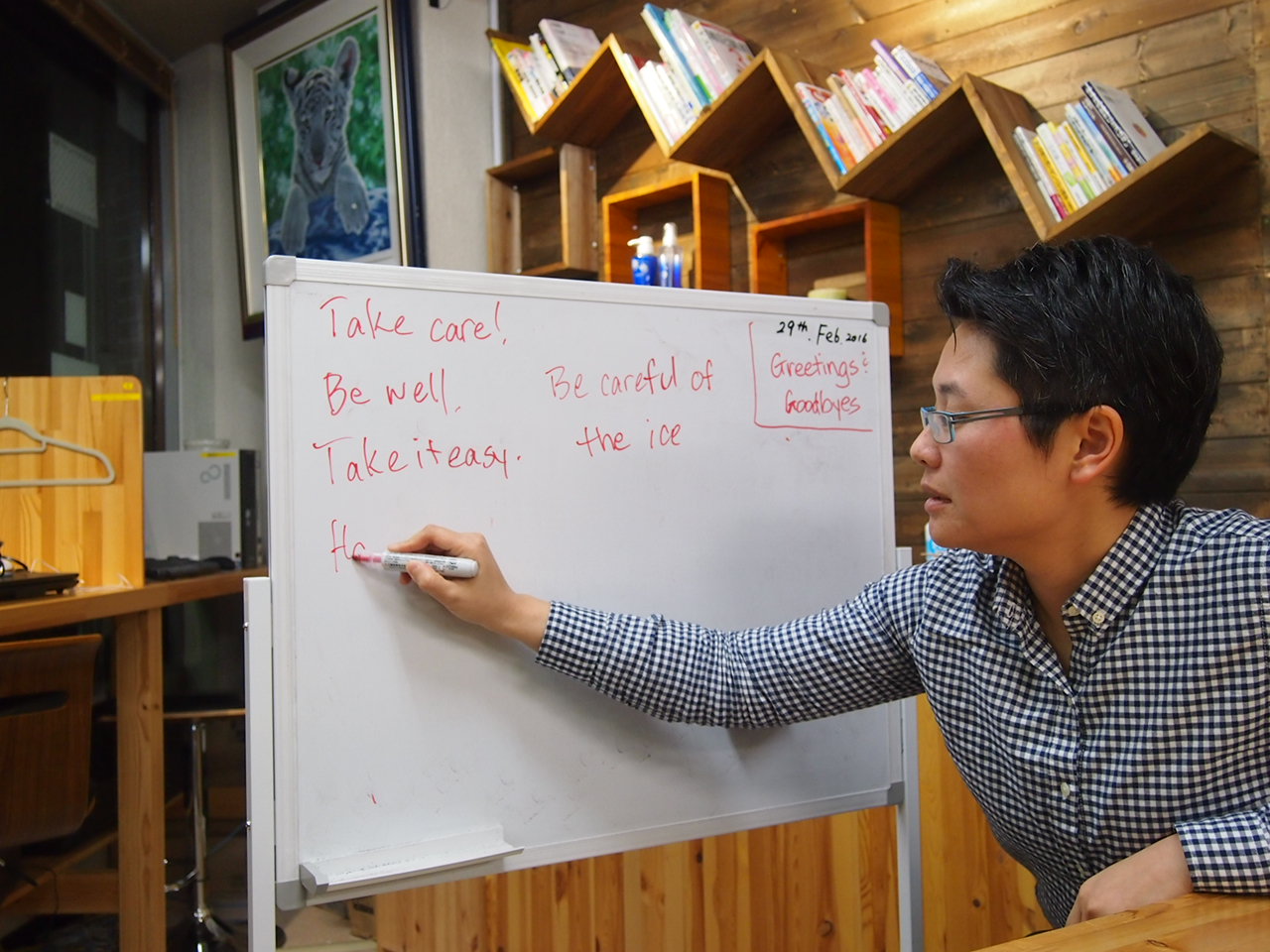
29th Feb.2016 どのあいさつの言葉がふさわしい? "Greeting and Good bye" Which word is better in Casual or Formal ? Writing or Speaking?


 Today, we have new comer Ms. Yuki Saito cames from Yukawa village. She is working at Ryokan in Higashiyama spa. She would like to upgrade her communication skill for oversea customers. Introduce from Tama-chan. Welcome to the class!! Nice to see you , Yuki.

今日は新しいお仲間が加わりました。湯川村のさいとうゆきさんです。会津若松市東山温泉の旅館にお勤めで、外国のお客様の為に英語のスキルアップを目指してるそうですよ。どうぞよろしくお願いします。

******* Let's start today's lesson !***Today's teacher is Cat
Today’s subject is “Greeting and Good-bye”, how to start and closing conversation smoothly. According to Cat, conversation and writing has a different style. Let’s study♪

本日のお題は、挨拶(あいさつ)。スムーズな会話の始め方と終わり方について。キャット曰く、会話の場合とお手紙やメールの場合で違うそうです。それでは、やってみましょう♪

=== For writing 書類・手紙・メールに適した表現

----- Opening(はじめの言葉)-----

Salutations (サル-ユー-テーションズ *formal greetings on E-mail or Mail)= こんにちは
Greetings(”from Aizu” in a letter) = こんにちは *親しみがこもった感じ

----- Closing word ( わかれるときの言葉) -----

*Casual カジュアル
...With love, / Love /
...xoxo ("x"=Hug & "o"= kiss) /
...Keep in touch = K.I.T (use for writing only)

*Formal フォーマル
...( ビジネス用語 )...Regards, / Best , / Kind regards, / Best Regards, /
...( 心を込めて ).....Sincerely

===== For Conversations’ 会話の場合の表現

----- Opening(はじめの言葉)-----

*Casual カジュアル

...Hello, how are you? (こんにちは、元気?)
...Hi!  (ハイ、(you two, everyone! お二人さん、みんな等と続けます)
...Hello! - こんにちは
...Good morning (afternoon / evening) / (Don’t use “good bye”)
.....-おはよう、こんにちは、こんばんは(いきなりさようならと言わないように)
...What’s up? (最近どう? (若い人の言葉、大人が使うとちょっと下品かも?)

*Formal フォーマル

...Hello, How do you do? (初めましてこんにちは)
...Nice to meet you. (初めまして)

===========
以上のような言葉の後に、次の会話(本題)へと進むと自然です。
例えばお友達を紹介する場合

*Hello, how are you? I would like to introduce you to my friend "Mocchan".
(こんにちは元気? あなたに私のお友達のもっちゃんを紹介したいの。)

***注目!"you"の位置に注意!!
.....I would like  you  to ~のように、"like"の直後に入れがちなので、気をつけて!

===========
*May I invite you to join us in our English class. 
(私たちの英語教室に参加しませんか?)

*May I ask you to teach English to members of our English conversation class sometime.
(いつか私たちの英会話教室で教えて頂けませんか?)

----- Closing word ( わかれるときの言葉) -----

*Casual カジュアル
... Be well / Take care / Take it easy

*Formal フォーマル
...Be careful of ~
...Thanks for coming,
...Thank you very much for coming.
...See you ~ また会いましょう~
.....(~にはnext week / tomorrow / tonight / in the morning / soon等を入れる)

Hope to see you again, soon.

初めの"I"を付けない(Hope to see you again)と、社交辞令のような表現で「またお会いしたいです」といった響き。
"I"を付ける(= I hope to see you again) と、気持ちがこもった表現になるそうですよ。

Have a nice ~
(~にはday ,fun, weekend, week, ride, time, evening, night等を入れる)

近い未来の事を願って掛ける言葉というニュアンスなので month, year 等は使わない!

<< その他のお別れの表現>>

Talk to you later. また後でお話ししましょう
I've got to go ~   I've got to get going ~  そろそろ行かなくては。
I'm sorry I have to go  ごめんなさい、いかなくては行けません。

* have to を、I must go ~ にすると、もっと丁寧な響きになります。

I look forward to meet you on our next meeting. 次に会うのを楽しみにしています。
================
「おめでとう」の表現

*Congratulation on +名詞= your success / new job / passing your exams / on your graduations.

*Congratulations on +動詞 = your は不要で、 graduating high school.

 (動詞は"ing"を付けて進行形にしましょう)

=== おまけ ===

誘われて、私も!(me too)というのは簡単ですが、そこでお断りする時の表現

"Neither"を使うと良いそうです。否定的な表現に対して同意する時。

・・っていまいちピンと来なかったので調べてみましたがやっぱりしっくり来ません。 
確認したい方は以下のサイトでチェックしてみて。
http://eow.alc.co.jp/search?q=neither

https://kotobank.jp/ejword/neither

http://ajieigo.com/1005.html 

次回、先生に詳しく聞いてみたいです~ 
では、See you next week !!


2016年2月24日水曜日

22nd Feb 2016 スマートに誘いたいとき、どう言えばいい? ...How should I say ... when you widh to invite your friend more smartly?

*Lesson on February 22, 2016  *Teacher : Mr. Aaron *Participant : Mocchan / Shizu / Namiki *Special thanks : Namiki !

今日のテーマは、スマートな誘い方♪…について。
(気まずくならない断り方。は時間の都合で割愛・・to be continue ?!)

The thema of today's lesson was how to invite more smartly.

アーロン先生曰く、ポイントは、万国共通。
まずは会話の中から相手の興味のありそうなものを探り、それからお誘いしてみる。自然な会話の流れからの誘いの言葉を導きましょう。そこで、とっかかりの会話に適した表現をいくつかピックアップしてくれました。
===
Do you like ~? Well, there is ~.   ~はお好きですか?でしたら~~~
A) I was thinking about ~. ...私は~を考えています
    If you are interested, ...? ..もし興味があるなら...
B) Would you like to go? .....もしよろしかったら...行きませんか?
    If you would like to go,~ もしご興味があったらいかがですか
    We should go sometime. ....たまにはいかなくちゃ
    Let's go ...           行きましょう
    What do you like to do?    どんな事をするのがお好きですか

A+B+ Do you have time? / Are you free?
(A+B の会話の後だったら、時間ある?などカジュアルな表現でも、十分使えるそうですよ)
答え方のアドバイスとしては
Sound good/nice/great  (よさそうだね、いいね、すばらしいね)
Why not. (もちろん、とか、いいじゃない、って感じ?!) 
ただYESというよりナチュラルで、誘ってもらって嬉しい感じも伝わるようです。
===
上記のワードなどを使いながら会話をふくらませ
先生を誘ったり、誘われたり、のロールプレーイングスタートでーーーす。
スタートはしづさんから。
カフェと商店街の事務員、二足の草鞋(にそくのわらじ)で忙しくてちょっとお疲れ気味のようです。

Shizu-san:  I’m so tired because I have double job. (二つの仕事を掛け持ちしてるからつかれちゃった。)
Aaron:  What do you like to do after work Shizu? (仕事の後のお楽しみはなに?)
Shizu-san:  I was thinking about drinking wine to going to the wine bar. (仕事が終わったらワインでものみにバーに行こうと思ってたの。)
Aaron:  Where is a good にtalian restaurant?  (何処かにいいイタリアンのお店ある?)
Shizu-san:  I like One`s home ? Italian caf?, I would like to drink Red wine.
 (私はワンズホームというイタリアンカフェが好きなの。赤ワインがのみたいわ。)
Aaron:  Oh me too, I like Italian foods. If you are interesting in wine, I know good restaurant in Koriyama. Nearby station, located at basement.
(僕もイタリアンが好きなんだ。もしワインに興味があるなら郡山のいいレストランを知ってるよ。駅の近くの地下にあるレストラン。
Shizu-san: That’s interesting. I have a time on Saturday afternoon.(おもしろそう、土曜日の午後なら時間があるんだけど)
Aaron: I`m free too, if you would like to go there, let`s meet at station.(僕も予定ないよ、もし行ってみたいなら、駅で待ち合わせましょう。)
Shizu-san: Sound great. (すごくいいわね。)
Congratulations!!
There dinner appointment was confirmed.
しづさんとアーロンは一緒にお食事の約束が成立したみたいです。いいなあ~

☆ one point advice from Aaron. アーロンからのワンポイントアドバイス。
  Meet at ~. (station, Mocchan's house, etc) ? ~で待ち合わせる
  If you are interesting in wine, ....
  前置詞としてinを必ずつける。
  Basement = 地下

次はなみきがトライしましたが、あえなく失敗↓↓会話が膨らまなくて、断られちゃいました~~
しかも、素敵な先生にボーっとしちゃって?!何を話したのか覚えていないという(汗)
で、先生がお手本でもっちゃんを誘ってみてくれました。

Aaron: Mocchan, do you like donut?(もっちゃん、ドーナツは好きですか?)
Mocchan: No,I don’t like it.(私、ドーナツはそんなに好きではないなあ。)
Aaron:What's sweet do you like? In state of donut.(ドーナツじゃないなら、どんなスイーツがすきなの?)
Mocchan: I like cheese cake, roll cake etc.(チーズケーキとかロールケーキ等は好きですよ。)
Aaron: Oh, I know nice cheese cake shop in Miharu.(オー、私は三春にあるチーズケーキのいいお店を知ってるんです。)
I was thinking about going to Miharu to eat cheese cake, if you are interesting would you like to go together. (三春にチーズケーキを食べに行こうと思ってるんだ、もし興味があったら一緒にいかない?)
Mocchan: Why not. (もちろん。)

イケメンにもぶれない塩対応のもっちゃん。
そして、それにもめげず、会話を膨らます先生、どちらもさすがです。
===
一緒に覚えておくと便利なワードです♪
1.誰かも一緒に誘うとき
Just you ? =あなただけ ですか?(=他に居ない?)
You can bring + 人または名詞 (Your wife/husband/friend. Wine/beer/drink etc) 
( 人または名詞 )をつれてきてもいいですよ。
Would you like to bring + 人または名詞... ( 人または名詞 )をお連れになりませんか。
例文)If you would like to bring your wife, please do. (もし奥様をお連れになりたいならぜひどうぞ)
注目!!!
日本人はPLEASE、から始める傾向にありますが、それはナチュラルな英語表現ではないようです。
同じく、日本人がやりがちな間違った表現として常々気になってることがあるそうですよ。
~に興味がある、という事を伝えたいときについつい言っちゃってませんか?       
間違いやすい表現...I am interesting.= 私は面白い人 
正しくは...........I am interested in ~ = 私は~に興味を持っている
同じように退屈だという事を伝えたいとき
間違いやすい表現...I am boring. = 私はつまらない人
正しくは...........I am bored. =私は退屈です
確かに、やってそうな気がします。気をつけます。

*** まとめ ***
日常会話の中から、相手に興味がありそうな話を見つけて誘いしましょう。
大事なのは誘うときの声とイントネーション。ソフトな声で、抑揚をつけてやさしく気持ちを込めて話しましょう。英語では、サウンドが大切です。あと、これが重要、お誘いの時は笑顔でね~~~~
以上、素敵なお誘いの仕方レッスンでした。

***おまけ。
ホワイトボードにメモを書いていたアーロン先生、このペン出ない~というので、いつもの持ち込んでいる"Myペン"を渡します。が、そのペン、ふたの部分にクリーナーが一体になってるタイプだったので、"これは消すことはできるけど??"と先生は困惑顔。
そんな先生をみて、もっちゃんが「日本で一番有名な英文」で一言。
「This is a pen !」 このフレーズを実際に使ってる所、初めて遭遇しました。
アーロン先生も、あの文章、なんの為に教えてるんだと思ってたそうですが、まさか、自分に使われるためだったとは~~~と大笑いでした。さすが、われらが委員長ですね~~~~(^_-)-☆


2016年2月18日木曜日

15th Feb 2016. 日本なら当たり前!? 人の心の"本音と建て前" Real feeling and one's public stance.
Please speak your story.

Hi, everyone! I'm Mocchan.
(Special thanks for helping to write ,Namiki and Kate)
The theme of today's lesson was "Real feeling and one's public stance".
[ 本音と建て前 (Hon-ne to Tatemae) ]
Let's talk about the story around you !

みなさん、こんにちは。記事投稿が遅くてすみません!
今週のレッスンのテーマは、「本音と建て前」でした。
各自、自分のまわりで起きた「本音と建て前」にまつわる話を発表しました。
-----
“Humility is a virtue“, it is a Japanese basic personality, however sometime it makes people confuse.
謙遜は美徳、が日本人の精神ですが、はっきりと言葉にしない事で、人々を混乱させる事も。
It is one of story from Rakugo……generally speaking about Kyoto.
京都の人は特に、本音をはっきりと言葉にしないようです。
実際に体験した事、というよりも、落語の中のお話ではありますが。

Shizu-san said,
Kyoto people, somebody visit to Kyoto people's house, then if they wanted to guests to get out early, they offer something to eat(Use to said `Bu-bu zuke ikagadesuka?) and say please take your time ( or please be relax…), it’s mean “please get out little bit early.
When people get an unlikely or unwanted guest, they will use this technique.
If you got offer “Bubuzuke” you shouldn’t take it.
Kyoto people presume you to be in sensitive men = “K Y na hito”
しずさんが聞いた、京都の方の風習によると、京都の地元の方のお宅では、お客様に早く帰ってもらいたいときには食べ物を勧めて、ごゆっくりどうぞ、というそうです。こう声を掛けられたら、「そろそろお引き取りになったらいかがですか?」の意味です。
「ぶぶ漬けでもいかがですか」と、勧められても、いただきますと言ってはいけません。
京都の人に「無粋な人=KYな人」と思われます。
How about Aizu?!
Tecchan comment that
NO!!!!! Aizu people is not that character, for example if somebody visit my house, just welcoming. Even the lunch time. I will offer them to have a lunch together. They not necessary to refuse.
では会津ではどうでしょう?
てっちゃん曰く、会津ではそんなことないです。うちの店ではいつでも大歓迎、お昼時なら一緒に食べましょうと誘います、遠慮して断る必要はないです。

Sam-san said, Kitakata people is so nice. Commonly offer delivery Ramen to eat together, even unexpected or unwanted guest. (Host will pay for guest)
サムさん曰く
喜多方の人たちはとっても優しいです。お客様が来たらラーメンの出前でおもてなしします。たとえ、予定外のお客様や、来てほしくない人でも。お迎えする側がゲストの分も支払います。

Namiki-san said,
Talking about Bali.
Due to Bali Hindu policy, Balinese people used to welcoming everyone, even they are busy or no time.
They said, time is like a rubber, sometime get long, and sometime get short. So it’s to be flexible. They trust that guest right in the front of you is most important.
By the way, basically they will offer coffee for male and tea for female,
They know coffee makes cold in body inside and women have to take care about keep worm.

なみき曰く
バリ島の話ですが、バリヒンドゥー教の教えに従って、来たお客様は誰でも歓迎します。たとえとても忙しい時でも、時間がない時でも。彼らは、時間はゴムのように伸び縮するものだから柔軟に対応すればよい、といいます。今目の前にあるものがまず大切と信じて。
ちなみに、男性にはコーヒー、女性にはお茶を勧めるのが普通です。
コーヒーは体を冷やす、そして、女性は体を冷やさないように気を付けたほうが良いと考えられています。

Cat-san said.
Before she came to Japan, she was learning about humility.
If somebody said `You are use chopstick very well” I answer them `son na koto nai desu`.
Because many people told me, when you get complimentary you should refuse first.
After that if they keep saying it, I will answer ` honto desuka, arigato gozaimasu`. 
In America is different, you should say thank you right way.

キャット曰く
日本に来る前に、日本人の謙遜の文化について学習しました。
もし誰かに‘お箸を使うのが上手ですね‘と言われても、‘そんなことないです‘と答えます。
なぜなら、いろんな人からもし褒められても、最初は断るようにと言われました。
もし、もう一度ほめてくれたら、そこで‘本当ですか、ありがとうございます’と、御礼をいいます。
アメリカでは違います、褒められたらすぐにお礼を言いましょう。
キャットはベトナム人のご両親から、ベトナム流のマナーで育てられてきたので、実はこの日本的な謙遜の文化の方が、アメリカンな文化よりもしっくり馴染みやすかったそうですよ~

Mocchan said.
It is about her mother about 10 years ago.
I and my children ,my brother, brother's wife went  to go shopping to Sendai.
My mother was at home alone. When we go out to Sendai, we asked her "What do you want something to eat or interesting goods to use for you ? If you want something, we will buy it for you". Then she said "Nothing ! Please enjoy yourselves, nothing . I don't want anything. I hope you are enjoy!".
...Really we didn't buy anything for her at Sendai. She said "気がきかない!!(Ki-ga-Kikanai ! )" She became very angry ...!
*Her real feeling (本音) might be "I wish they will buy something for me at Sendai... food, goods, ...?".  *Her public stance(建て前) was "Nothing, I don't want anything  with her smile." *We cried "Why! Mommy !?" in our mind. That's all!

もっちゃん曰く
私、子供たち、兄夫婦で仙台に買い物に行きました。母は一人でお留守番です。私たちは行くとき何か食べ物などほしいものある?あるなら買ってきてあげる。と聞きましたが、「何にも
要らないから、みんな楽しんできて」と。。。本当に買ってきませんでした。すると彼女は「気がきかない!、と言って怒ってしまいました」本音は何か買ってきて欲しかったんですね・・・。

ということで、今回のレッスンの内容でした!!長くなってしまいましたが、細かな単語の説明は、別途ブログでアップすることにします。お楽しみに!!

2016年2月17日水曜日

23th Feb 2016.
スキー・ワールドカップ出場☆やっつんを送り出す会、開催!
About Send Off Party for "Yattsun"(Ski Player,World Cup of Ski ) Will be held !!

みなさんこんにちは。みなさんにお知らせとお願いです。
先日の新規参加者、Yattsunこと八並朋之(やつなみともゆき)さんが来月カナダで行われる、スキーのワールドカップに出場することは、すでにご存知と思います。Yattsunをカナダへ送り出す会が開催されるのでこの場でお知らせ致します。お時間ある方はぜひ足をお運びになってください。どうぞよろしくお願い致します。( ご祝儀大歓迎!!) 
Yattsun(Speed Ski player=Yatsunami Tomoyuki = He joined our English conversation lesson on this month) His Supporters planed a send off party for him. We hope that many people will go.
* Date: 23th Feb. 2016 *Time: 18:30~
* fee: 1000yen (= drink and some food, * separate he wishes to get donation)
* Place Aizu-Coffee Club(会津珈琲倶楽部) 11-43 Nisshin-machi Aizuwakamatsu-city
* Deadline of subscription: 21th Feb. TEL.0242-27-9012(Aizu-Coffee Club)
---------
* 日時: 2月23日(火)18時30分~
* 開催場所: 会津珈琲倶楽部 会津若松市日新町11-43 TEL:0242-27-9012
* 会費: 1,000円 (※別途ご祝儀大歓迎!!)
* 申込締切: 2月21日(日)TEL:0242-27-9012(会津珈琲倶楽部)
---------
みんなで八並さんの活躍を見守り、応援しましょう!詳しくは下記の案内画像をご覧ください。


2016年2月9日火曜日

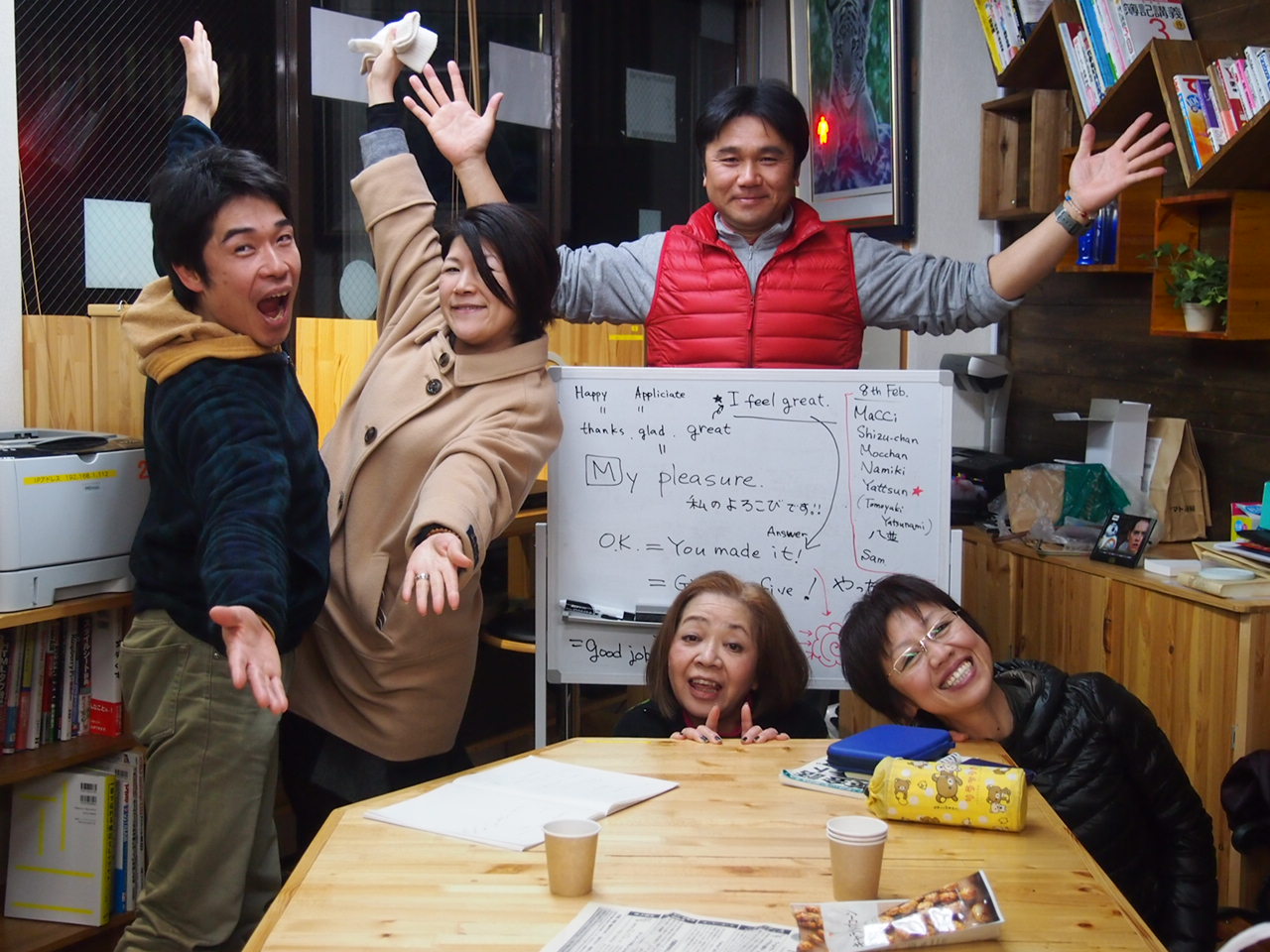
8th Feb 2016.プロスキーヤー・やっつんがみん英に来る!
We had a new commer. His name is Yattsun!

Hello, everyone. I'm Mocchan.

みなさんこんにちは。もっちゃんです。
今週のレッスンの内容をお知らせします!

今日は、新しい参加者を迎えました。彼はプロスキーヤーでワールドカップにも出場するようなすごい人です。その人は会津大学出身と聞いてびっくり、長崎県から来たと聞いてまたまたびっくりでした。長崎には雪が無いのに!!

We had a new commer today.
His name is Yatsunami Tomoyuki.We call him Yattsun.
He is a great skier. He is one of the professional skiers of the world.
We were surprised to hear that he came from Nagasaki prefecture in Kyu-syu and he was a college student in Aizu-univ. They have no snow in Nagasaki.


(( contents of today's lesson ! ))

1. Review of last week


[ be in charge of ~ ]  ~を担当している
ex) Namiki-san...
  I am in charge of administrator of private high school.

  私は私立高校の事務を担当しています。

* same mean words
... be working in ...
... belong with ...


2. Today's contents

1) [ get rid of  ~ ]   ~をあきらめる

***ゲッリロヴ、と発音するとそれっぽく聞こえます== Mocchan's thought
give up 、quit (辞める)も、同様の意味なのですが、
get rid of ~ は、口語的で、英話を使いこなせる感じに聞こえる言い回しだそうです!


(( Let make a sentence! ))
Shizu-san......I get rid of eating steak because ...(Why Shizu??)
Namiki-san...I get rid of diet because I love sweets.
Sam-san........I get rid of professional resler because I needed 10cm height more.
Mocchan.......I get rid of climbing (top of )Mt.Fuji because I don't have (such) power.
Yattsun.........I get rid of giving up challenging my dream because it's my dream.


2) 「うれしい!」と言うときの表現は?  How to say when we are happy ?
  happy , appliciate ,  thanks , glad , great
* 言い方は....."I feel great."
* その返事は..."You made it!"


「お疲れ様!」 「 やったね!」 「良くできました! 」 「花まる!」 と言いたい時は...
Good job !   , You made it!
You did it!   ,  Well done! など。


最後に、
[ Give me five ! ]...<= これはどういうことでしょう ?? 

fiveは片手のこと。2人で片手を高く挙げてタッチ!
-->上下からタッチ! 直後に-->下と
上からもう一回タッチ!
スポーツで勝利したりポイントを取った時などに使いましょう!


では、またね!
See you next Monday, see you around !!


****************************************
もっちゃんずアドバイス Some chips from lesson
****************************************
 
「お腹が痛い」
** 痛い= pain を使って
I feel pain my stomach.
I have pain on my stomach.

先週もやりました、のどに違和感がある(痛い)。
I have problem on my throat.


**ついでに!
鎮痛剤=== pain killer ==(痛み殺し!?)
鼻水===== running nose== (走る鼻!!)
"E"として== as  "E" ex)  I began to work as a farmer 2 years ago.
私は2年前、農業を始めた。(as a farmer >> 農業者として働き始めた)


以前====before
ex) I was playing KARATE before.
私は、以前、空手をやっていました。

----
Mocchan looked  the person called "KY" in Japanese.
(The person looks strange in the place.)
She said "But my blood type is A !!"
* KY = ケーワイな人 = Kuki Yomenai hito = 空気読めない(人)


長くなってしまいました!  ではこの辺で失礼します!


2016年2月3日水曜日

1st Feb 2016. 自己紹介の時に使おう!私の担当は~です。 How to use "I'm in charge of~".

Hello everyone!I'm Kate.
早いことでもう2月です。
みん英メンバーはお仕事が忙しかったり、風邪を引いたりと皆さんお疲れの様子でした。

今回のレッスンでは、普段から疑問だった事柄やあまり日本人に馴染みがない
英語表現をMaCCi先生から教えていただいたのと、
MaCCi先生がいない間に何をしていたのかそれぞれ発表しあいました。

まず、MaCCi先生は先日スター・ウォーズの3Dムービーをご鑑賞されたそうです。
そもそも3DのDとは何なのか、確認しました。

3DのDとは?
3 Dimension→ 三次元  例えば(Building ビル ,Movie 映画 ,TV テレビ)
・2 Dimension→ 二次元  例えば(Picture 絵 ,Cartoon アニメとか漫画)
4 Dimension→ 四次元

次に、それではTVの4Kとは何?という話になりました。

4KのKとは?
1K=1000
※Kとは千と言う意味で、よくアメリカでは$3Kと言った値段表記があるそうです。

~MaCCi先生がいない間のできごと SAM-san編~
(今回はSAMさんの出来事だけ紹介します。ご了承ください。)

Samさんはスキー場でパトロールやリフト係りのお仕事をされていました。
Namikiさんから仕事中にスキーを楽しむ時間はあるのか聞かれた際、こう答えました。

Namiki-san:Do you have anytime to enjoy skiing while you work?仕事中にスキーを楽しむ時間はあるの?)
Sam-san:When I'm in charge of the lift, my hard work kill me a lot.(リフト担当のときは、多忙です。)
       But I'm in charge of patrol,I have a little time to enjoy skiing.
      (パトロール担当であれば、スキーを楽しむ時間は少しあります。)

I'm in charge ofという慣用句はTOEICでも出てきそうですね!
さあ、早速問題を解いてみましょう。答えはこのブログにあります。

When I'm in charge _ lift, I don't have time to enjoy skiing.
(1)off
(2)on
(3)up
(4)of

Samさんの話を聞いた時、私はあまりの大変さに「死んじゃいそう!」と思いました。
そんな時は "It's killing me!" と表現するそうです
相槌打つ際に同じ表現ばかり使いがちなので、知っておくと英会話レベルがupしますね

Samさんが言ってた "Holy cow!" って表現もいつか使ってみたい★
↑こちらはアメリカの知人が使っていたそう。


☆もっちゃんずアドバイス  (レッスンで出てきた単語を記載してます)
Dimension 次元、面、規模
・goodies おまけ
・reach 到着する
・as usual 普段どおり、いつものとおりに
・I'm in charge of ~ 私は~の担当です。 
・Private school 私立校 ⇔Public school 公立校
・Administration 受付
announce 発表する 合格発表=examination result announcement
・eardrum 鼓膜
※問題の答え(4)